At a Glance
Best For
Overview
At its core is a 30 W Raycus Q-switched fiber laser source that excels at deep, high-contrast black and gray engraving on aluminum, brass, steel, and even stone. The catch is right there in the name: this is Q-switched, not MOPA. That means the pulse width is effectively fixed, and oxidation-color control on stainless steel — the rainbow, gold, and blue marks that sell tumblers — is physically impossible on this unit. For buyers whose work is monochrome deep marking, jewelry detail, or production metal ID, the B4 30W punches above its price. For anyone who needs color, this is the wrong machine regardless of how good the hardware package looks.
Pros & Cons
Pros
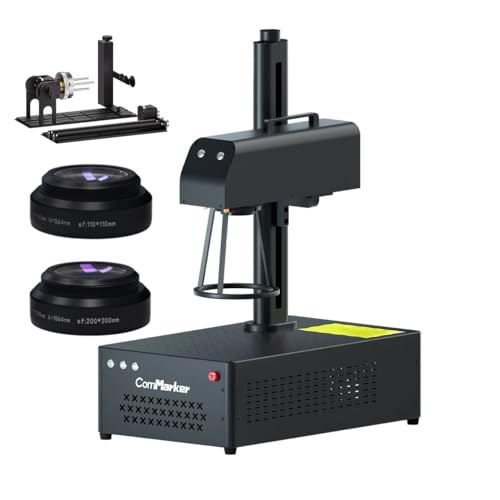
- The broader product evidence describes 110mm and 200mm lens options; verify which lenses are included in the exact current ASIN bundle
- Motorized electric Z-axis lifting reduces manual focus adjustment; verify the current controller and lift configuration with the seller
- LightBurn compatible with EZCad2 also included — both workflows supported; owners report LightBurn produces dramatically better deep engraving results than EZCad2 on this machine
- Deep engraving on aluminum, brass, steel, precious metals, and stone confirmed across multiple owner channels — 30W Raycus output handles production-depth marking reliably
- Handheld mode via detachable design — for large pieces or on-site marking that won't fit on the desktop platform, this is a workflow no other machine in this tier offers
Cons
- Q-switched only — no color marking on stainless steel; if color is needed, the separate B4 30W MOPA (ASIN B0DRY12JMW) has the JPT MOPA source; both use the B4 body but they are different machines
- LightBurn may require a separate Galvo license; confirm controller compatibility and licensing before checkout
- Initial LightBurn setup requires loading a markcfg7 config file and calibrating corfile field size for whichever lens is mounted — LightBurn forum threads show first-time owners spending hours on initial configuration
- No color marking — reinforcing the most important caveat: despite 'B4' appearing in ComMarker's MOPA lineup branding, this specific ASIN is the Raycus Q-switch variant; verify the ASIN if color marking is needed
- Customer support response is 24hr+ with documented language barriers — not viable for time-sensitive production downtime per LightBurn forum users
Build Quality & Design
ComMarker ships the B4 30W in a compact, all-metal chassis that weighs 4.2 kg and assembles in 15–30 minutes according to owner reports. The standout hardware feature is the motorized electric Z-axis — a concealed lifting motor adjusts focus height precisely without the manual cranking common on cheaper portables. Also in the box are two galvo lenses: a 110 mm lens for sharp, high-density 110×110 mm work, and a 200 mm lens that expands the field to 200×200 mm for larger pieces. A detachable head enables handheld marking for oversized or immobile objects, a workflow no similarly priced competitor offers. The trade-offs are real: there is no autofocus, so you still measure and set Z-height for every new workpiece, and there is no safety enclosure — the 1064 nm open beam is Class 4, meaning OD5+ eyewear and a controlled workspace are mandatory.
Laser Source & Performance
Inside the B4 30W is a Raycus RFL-P30QS Q-switched fiber laser source rated at 30 W output with a 20–60 kHz frequency range. "Q-switched" means the pulse width is effectively fixed around 130–160 ns — excellent for deep, high-contrast black and gray marks on aluminum, brass, stainless steel, and even stone, but not the variable 2–500 ns pulse width a MOPA source uses to control oxidation colors. The galvo system is rated up to 10,000 mm/s, fast enough for production batch work and fine jewelry detail without the power-loss issues reported on some competing units. The included 110 mm lens delivers the sharpest spot size and deepest penetration, while the 200 mm lens trades some power density for the ability to mark full plaques and large knife blades without repositioning. One honest limitation: the 200 mm field will not engrave as deeply as the 110 mm field in a single pass, so aggressive depth work still favors the smaller lens.
Software & Workflow
The B4 30W supports both EZCad2 and LightBurn. EZCad2 ships on the included USB key, but most experienced owners immediately prefer LightBurn for its dramatically better deep-engraving results and modern UI. First-time setup is not plug-and-play. You must import a markcfg7 configuration file, load the correct COR file, and manually set the corfile field size to match whichever lens is mounted — 110×110 mm or 200×200 mm. LightBurn forum threads from 2024–2025 show new owners struggling with framing that is "WAY too big" and spending hours on initial calibration. EZCad2 feels dated by comparison, is Windows-only, and some antivirus programs flag its installer. Once configured, LightBurn runs the machine reliably, but budget an evening for setup.
Use-Case Performance
Jewelry makers report excellent results on gold, silver, and brass using the 110 mm lens — fine detail, deep permanent marks, and clean text at ring-and-pendant scale. Knife and blade marking is a standout use case: owners confirm deep, durable black serial numbers and logos on steel that survive daily handling and resist fading. For drinkware, the machine pairs with a rotary chuck attachment (sold separately) to mark tumblers and cups with permanent, high-contrast black or gray results — but the critical limitation is that this Q-switched unit cannot produce the rainbow, gold, or blue oxidation colors that MOPA machines achieve on stainless steel. The 200 mm lens changes the practical range: full-size plaques, large blade sections, and award plates fit without repositioning, something 110 mm-only competitors cannot do without a lens swap or second machine. Handheld mode extends utility to oversized or fixed objects like machine parts and patio furniture that will not fit on the desktop platform. Business users praise the throughput potential and batch engraving mode, yet the documented 24-hour-plus support turnaround from ComMarker is a genuine operational risk if a deadline is tight. Stone and slate also mark successfully, a niche capability confirmed by owners engraving coins and coasters.
Value & Verdict
That combination is not available from OMTech, GWEIKE, or Monport at this price. The honest trade-off is capability. If your work is purely monochrome deep marking on metals, this machine out-delivers competitors. If color marking on stainless or titanium is even a future possibility, skip this unit — the Q-switched Raycus source cannot be upgraded to MOPA behavior. Buy the B4 30W if you need flexible field sizes and deep metal engraving without paying for color you will not use. Skip it if you need plug-and-play setup, same-day support, or any color capability at all.
Our Verdict
The ComMarker B4 30W is a Q-switched option for buyers prioritizing metal-marking speed and the included lens choices over MOPA pulse control. The verified Amazon offer was $1,799 on July 10, 2026. The OMTech ASIN referenced in older comparisons was out of stock, so compare this machine only with currently available, exact configurations.
| Full Specifications | |
|---|---|
| Wattage | 30W |
| Laser Type | Q-Switched |
| Laser Source | Raycus |
| Work Area (W) | 110mm |
| Work Area (H) | 110mm |
| Galvo Speed | 10000mm/s |
| Color Marking | No |
| LightBurn | Yes |
| Autofocus | No |
| Focal Length | 163mm |
| Weight | 4.2kg |
| Form Factor | portable |
| Software | LightBurn + EZCad2 (LightBurn Galvo license required separately) |
| Pulse Width | N/A (Q-Switched) |
Frequently Asked Questions
What work areas does the dual-lens system provide?
Can the B4 30W do color marking?
Is the B4 30W different from the B4 60W MOPA?
Related Buying Guides
Compare With Similar Fiber Laser Engravers
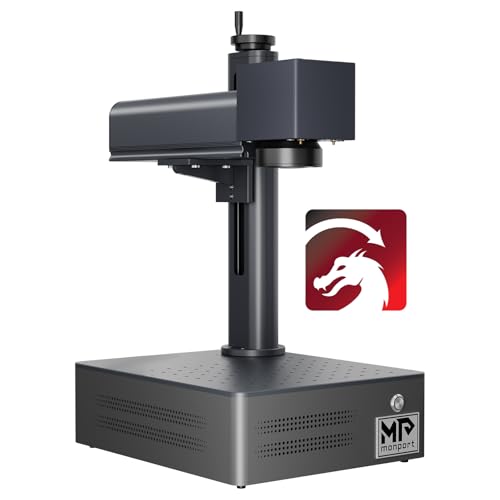
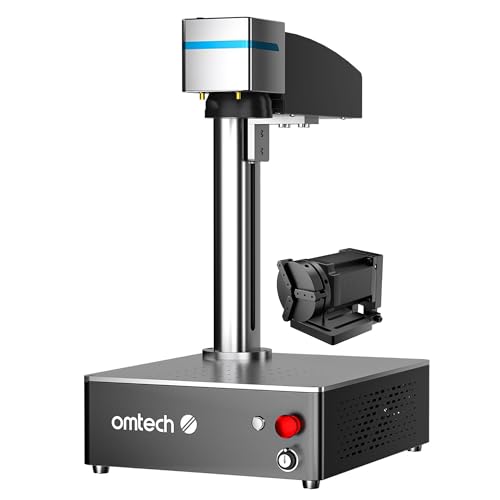
OMTech
30W JPT MOPA
30 W · MOPA · Yes
No current Amazon offer
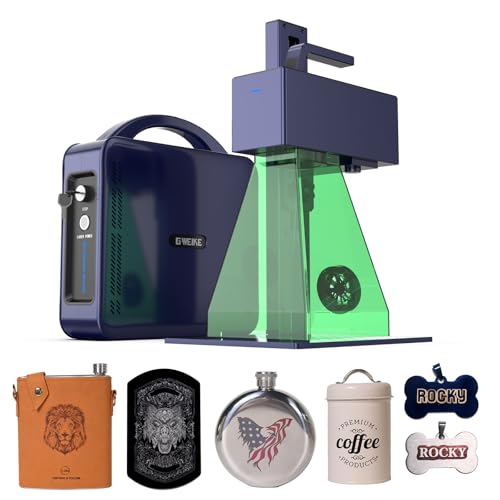
Head-to-Head Comparisons
ComMarker B4 30W Fiber Laser Engraver
$1,799
Amazon offer checked 2026-07-10. Price and availability can change.